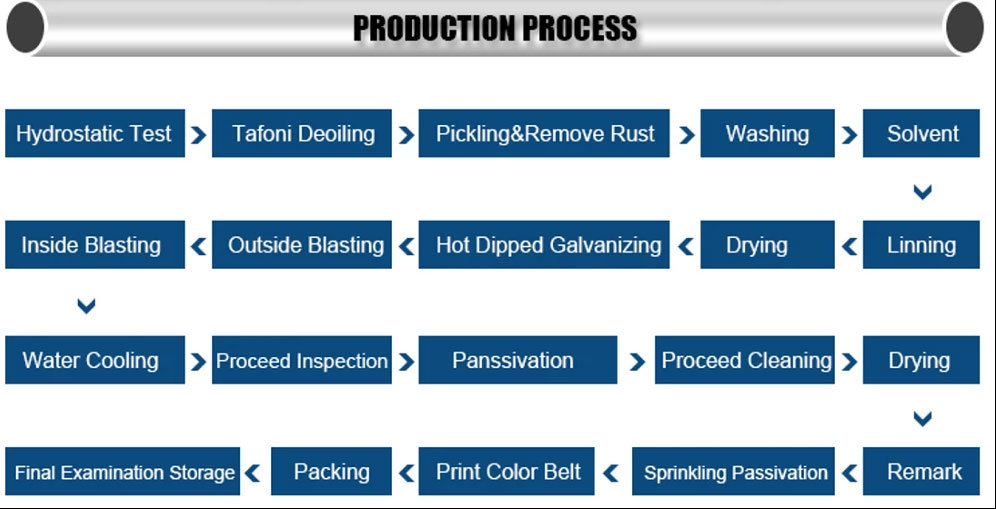
Manufacturing Process
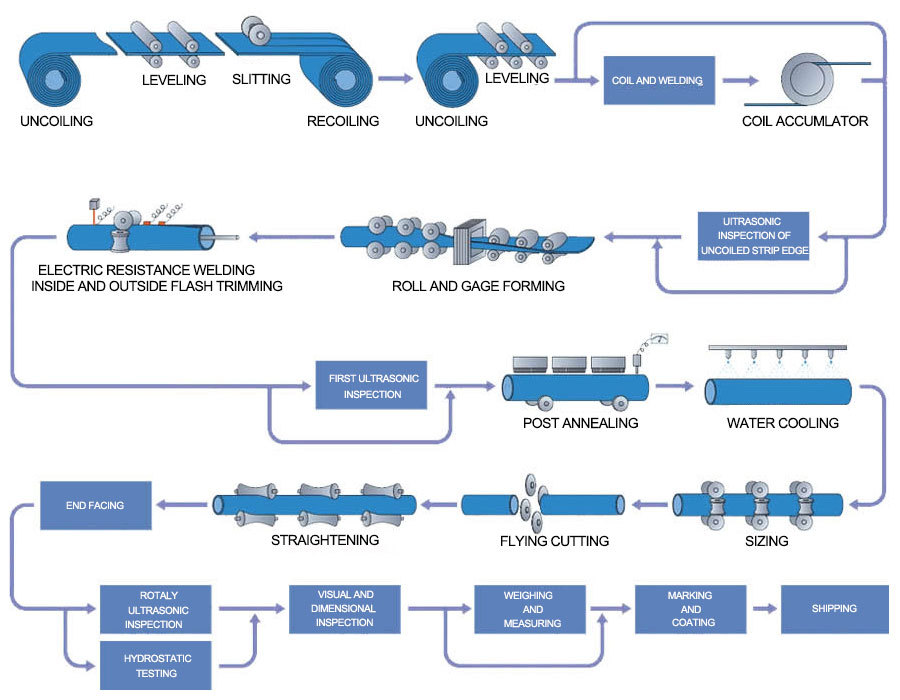
The manufacturing process of ASTM A106 steel pipe is a rigorous and multi-step process, ensuring the high quality and excellent performance of the steel pipe. The following is a detailed analysis of the manufacturing process for ASTM A106 steel pipes:
1. Material selection
Select high-quality carbon steel materials to ensure that the chemical composition and mechanical properties of the steel pipe meet the requirements of ASTM A106 standard.
2. Preprocessing
Pre treatment such as polishing, rust removal, and cleaning of steel to remove impurities and oxide layers, and improve the surface quality of steel pipes.
3. Hot working
Heating: Heat the pre treated steel to a certain temperature to prepare for the subsequent forming process.
Hot extrusion forming: After heating, the steel is extruded into the initial embryo of the steel pipe through the hot extrusion process.
4. Heat treatment
Heat treatment processes such as heating, insulation, and cooling are carried out on the initial embryo to improve the mechanical properties and corrosion resistance of the steel pipe.
The specific heat treatment parameters (such as heating temperature, insulation time, and cooling rate) will be adjusted according to the grade and purpose of the steel pipe.
5. Precision machining
Cutting: Precise cutting of heat-treated steel pipes according to customer requirements.
Polishing: Polishing the surface of steel pipes to further improve their surface quality.
Straightening: Straightening the steel pipe to ensure its straightness and dimensional accuracy.
6. Inspection
Strictly inspect the processed steel pipes, including dimensions, surface quality, chemical composition, and mechanical properties.
All inspections will be carried out in accordance with the requirements of ASTM A106 standard to ensure that the quality of the steel pipe meets the standard.
Manufacturing process characteristics
Hot rolling and cold drawing: ASTM A106 steel pipes can be manufactured using both hot rolling and cold drawing methods. Hot rolling is suitable for mass production of thick walled steel pipes, while cold drawing is suitable for producing small batches of high-precision and high-strength steel pipes.
Quality control: The entire manufacturing process is strictly controlled to ensure that the performance and quality of the steel pipe meet the requirements of ASTM A106 standard.
induction
The manufacturing process of ASTM A106 steel pipes is a complex and rigorous process, from material selection, pretreatment, heat treatment, heat treatment, precision machining to inspection, every step is crucial. This manufacturing process ensures that ASTM A106 steel pipes have excellent mechanical properties and corrosion resistance, which can meet the needs of various industries.